Fall Bear Safety in the Gunnison Valley
Learn how to be safe during bear season in the Gunnison Valley:
Fall in the Gunnison Valley is prime time for outdoor adventure and bear activity. As black bears prepare for hibernation, they forage constantly for food, sometimes wandering into towns and trails. Stay bear-aware this season with simple precautions to keep both people and wildlife safe.
- Bears are most active from August to November during hyperphagia
- Black bears are the only type of bears in the Gunnison Valley.
- Bears can be found in forests, alpine zones and in town.
- Stay safe during bear season by hiking in groups of three or more, making noise, staying on the trail, and carrying bear spray.
______________________________________________________________________________________
Fall is one of the best seasons for outdoor adventure—it’s also the time of year when bears are most active. While visiting Colorado in the fall, it’s important to be mindful of bear safety. As bears prep for hibernation, they are more active and food-driven. During this period, known as hyperphagia, bears forage nonstop for high-calorie food to sustain them during hibernation. Keep reading for tips about fall bear safety in the Gunnison Valley.
Why bear safety matters in the fall
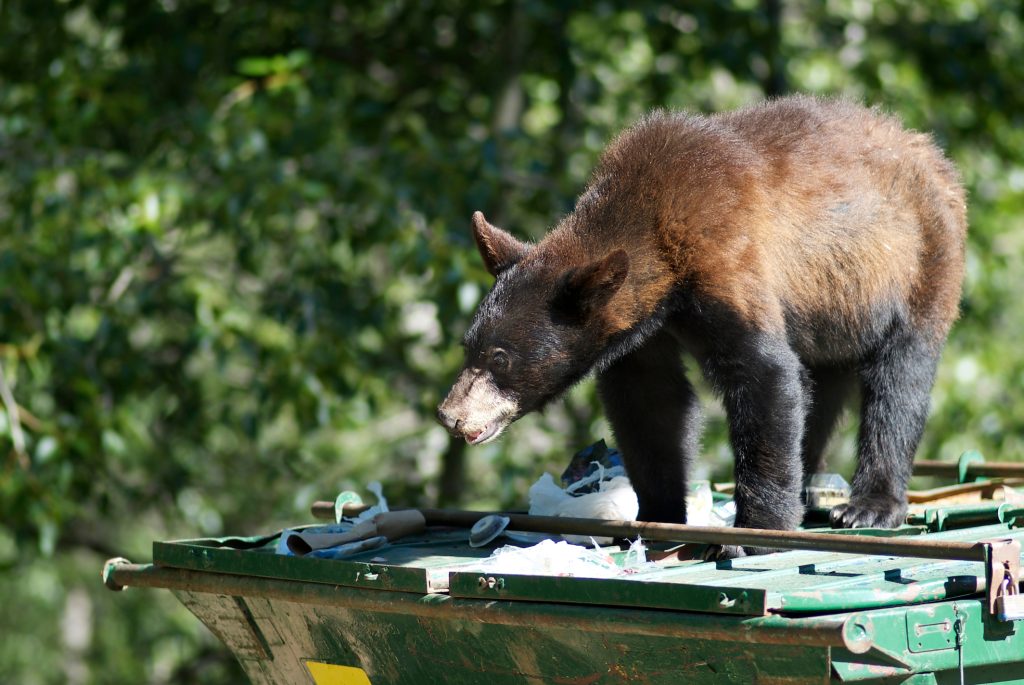
Bears are more active beginning in mid-August through October or November as they pack on the pounds and create a den. Dwindling food sources can cause bears to be more aggressive as they prepare for hibernation. They are focused on finding food and roam freely where they think they’ll find it. This includes areas with people. Hungry bears might follow their noses into town to scavenge in trash cans, dumpsters, backpacks, homes and cars.
Keeping human food away from bears is important for the safety of people as well as bears. Bears that become accustomed to human food can reject natural food. They can become such a problem around trash cans, outdoor pet food, bird feeders, dumpsters and cars that they must be removed from the area. Eating trash and human food can also be detrimental to a bear’s health.
What kind of bears live in the Gunnison Valley?
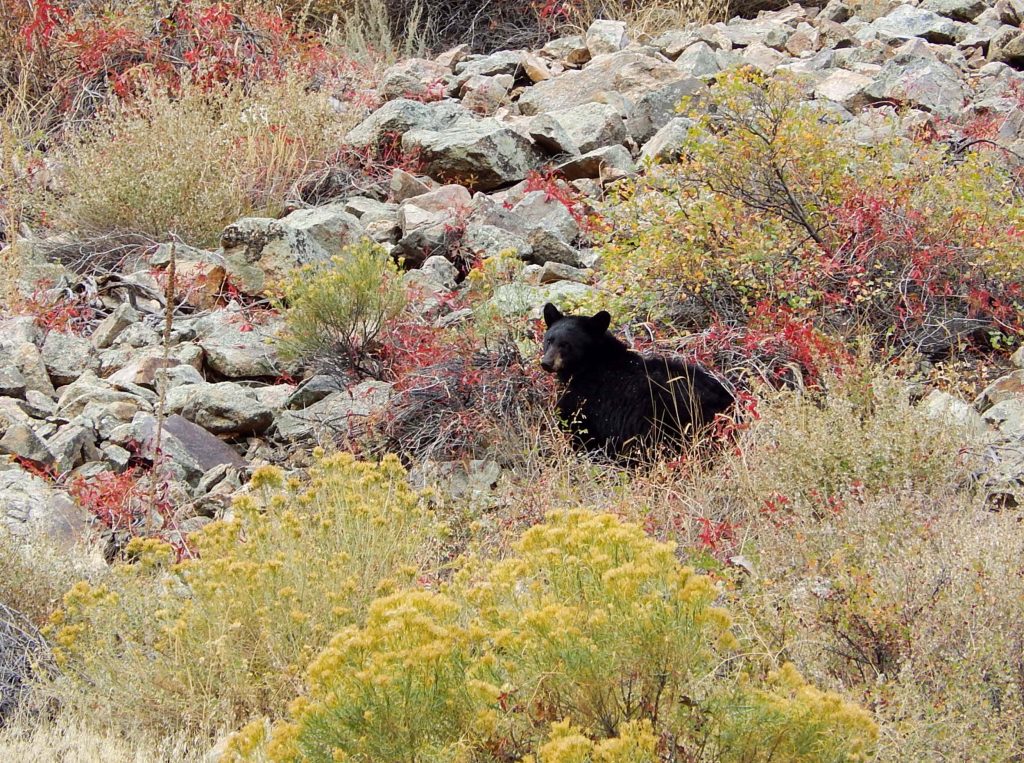
Black bears are the only type of bear in the Gunnison Valley. The fur of black bears in Colorado can be black, brown, cinnamon, honey-colored and blond. Black bears have flat shoulders that are level with their rump.
Their face profile is straight from the eyes to the tip of the muzzle. The ears are tall and oval-shaped. Black bears are also smaller than grizzlies. This National Park Service article offers a side-by-side comparison of black bears and grizzly bears.
Where you might encounter bears in the Gunnison Valley
Black bears in the Gunnison Valley can be found in forested areas, riparian zones, the foothills, alpine forests and near fruit-bearing shrubs. They are common around places like Pitkin, Taylor Park, Kebler Pass and Ohio Creek. Bears also live in all the towns of the Gunnison Valley: Gunnison, Almont, Crested Butte, Mt. Crested Butte and Pitkin.
Trail safety tips for hikers and bikers
Check with local land managers for recent bear activity or closures due to bears. Hit the trails in groups of three or more. Make noise on the trail with bear bells or by talking.
Stay alert and be mindful of your surroundings. Look for bear signs such as fresh scat, tracks, claw marks or places where the ground has been disturbed. Stay on maintained trails and only venture out during daylight hours.
Food storage safety for bears
Food storage is important for fall bear safety in the Gunnison Valley. Bears that eat human food can lose their taste for natural food. They can also become desensitized to humans and associate humans with tasty snacks.
Don’t leave food visible in your vehicle. Keep your car and vacation rental windows closed and doors locked. While on the trail, don’t leave packs with food in them unattended.
What to do if you see a bear
Never approach bears. If you encounter a bear that is unaware of you, quietly back away and leave the area. If the bear also sees you, stay still and speak in a normal and calm voice. Don’t run or try to climb a tree as this can trigger the bears predator response.
If the bear doesn’t move on, wave your arms slowly to appear larger and talk calmly. Slowly back away while facing the bear until it is out of sight. Carry bear spray as an extra precaution. If a bear attacks, fight back. Do not play dead.
Respecting wildlife
No matter the season, be respectful of wildlife. Never feed or approach wildlife. Keep pets under control with a leash or voice command. Keep kids close and teach them to stay back and not touch wildlife.
Bear resources
Colorado Parks and Wildlife (CPW) has resources for being bear-aware in Colorado. Learn more about bears in fall and living with bears. Contact the Gunnison County CPW headquarters for more information and resources. Discover more resources for being bear-aware in Colorado compiled by the Colorado Tourism Office:
Keep Wildlife Wild
Where to See Colorado Wildlife This Fall
Wildlife on the Move
Food Storage 101
Crossing Paths with Wildlife
Ethical Wildlife Viewing
Frequently asked questions about bear season
When is bear season in the Gunnison Valley?
Bears are most active from spring through late fall, but activity peaks in late summer and fall (August-October) as they prepare for hibernation. During this time, they wander widely in search of food and may be seen on trails, near campsites or even around town.
Can I safely hike or bike during bear season?
Yes! Many people enjoy trails safely each fall. The key is to stay alert, make noise and follow bear-aware practices. Carrying bear spray, traveling in groups and keeping pets on a leash go a long way in preventing encounters.
What should I do if I see a bear on the trail?
Stay calm. Do not run as this may trigger a chase response. Speak in a calm, firm voice and slowly back away to give the bear space. If the bear doesn’t move on, wait it out from a safe distance. Contact Colorado Parks & Wildlife if the bear is lingering near people.
How can I avoid attracting bears while camping or picnicking?
Always use bear-proof containers or lockers for food and scented items (toiletries, trash, even sunscreen). Never leave snacks in your tent or pack. Clean up thoroughly after meals and pack out all garbage. Bears have an excellent sense of smell and will investigate unattended items. To avoid this issue entirely, book lodging and stay in a cozy hotel or vacation rental.
Are mountain bikers at higher risk of surprising bears?
Bikers move quickly and quietly, which can startle wildlife. To reduce risk, ride with a bell, call out when approaching blind corners and stay alert for signs of wildlife. Slowing down in dense vegetation and open meadows where sightlines are limited also helps.
Should families with kids avoid hiking in bear season?
Not at all. Many families safely enjoy the trails in fall. Teach kids simple bear-aware rules: stay close to adults, don’t run if a bear is seen and never approach or feed wildlife. Stick to popular, well-traveled trails if you’re concerned.
Do bears come into town in Crested Butte or Gunnison?
Yes, especially in the fall when natural food sources dwindle. Bears may wander into neighborhoods looking for trash, bird feeders or outdoor pet food. Visitors staying in rentals should follow local guidelines for trash storage and never leave food outside.
What’s the most important thing to remember during bear season?
Respect wildlife and give bears plenty of space. Staying bear-aware not only protects you and your group, but it also protects the bears by preventing habituation to human food sources.
Bear Safety Tips for Visitors and Locals
- Secure trash in a garage or locked shed until pickup time.
- Don’t leave food in your vehicle or outside.
- Lock your vehicles and house.
- Take down bird feeders.
- Never leave dog bones or pet food outside.
- Get an electric fence for chicken coops.
- Get bear-locking trash cans and dumpsters.
- Use car alarms, airhorn whistles, or banging pots and pans to scare bears if you encounter one.
- Call Colorado Parks and Wildlife right away at 970-641-7060 the first time you spot a bear. If you spot a bear before 8 a.m. or after 5 p.m., call 9ll for emergency dispatch.
Plan your fall trip
Get started on planning a fall trip with this sample fall weekend trip itinerary. Discover fall events and activities in our fall guide. Learn more about more types of wildlife and where to see them in the Gunnison Valley. Book flights, find a place to stay and get travel tips on our trip planning guide. Learn more about wildlife safety in the Gunnison Valley on the Mt. Crested Butte website.
