Best Hikes to See Wildlife in the Gunnison Valley
Read about the best hikes for wildlife spotting in the Gunnison Valley:
Wildlife thrives across the millions of acres of public land in the Gunnison Valley, where diverse habitats, such as high desert and alpine forest, make every hike an opportunity to spot Colorado’s wild residents. From marmots and moose to bald eagles and black bears, the valley’s trails promise unforgettable encounters for nature lovers.
- Wildlife Hotspots: Snodgrass Mountain (marmots, pikas), Lupine–Gunsight–Lower Loop (moose), Neversink Trail (waterfowl), and Summerville Trail (bald eagles, black bears).
- Rich Ecosystems: Explore environments ranging from sagebrush plains to alpine meadows and marshlands.
- Common Sightings: Elk, mule deer, foxes, bighorn sheep, moose and over a dozen bird species.
- Best Viewing Times: Early morning and dusk in spring, summer, or fall.
- Wildlife Etiquette: Keep distance (100+ feet for large animals), don’t feed wildlife and stay alert but respectful.
- Seasonal Closures: Certain trails close in spring to protect elk, sage grouse and other species.
______________________________________________________________________________________
Discover the best hikes to see wildlife in the Gunnison Valley. Thanks to millions of acres of public lands, wildlife is abundant in Gunnison and Crested Butte. Imagine rounding a bend on a hike to spot a bull elk bugling, or catching the flit of a mountain bluebird over fields of wildflowers. Whether you’re an avid birdwatcher, wildlife enthusiast or simply hoping for a magical moment in nature, the Gunnison Valley’s diverse trails offer countless chances to encounter Colorado’s wild side up close. Keep reading to discover the best hikes to see wildlife in the Gunnison Valley.
Public lands in the Gunnison Valley
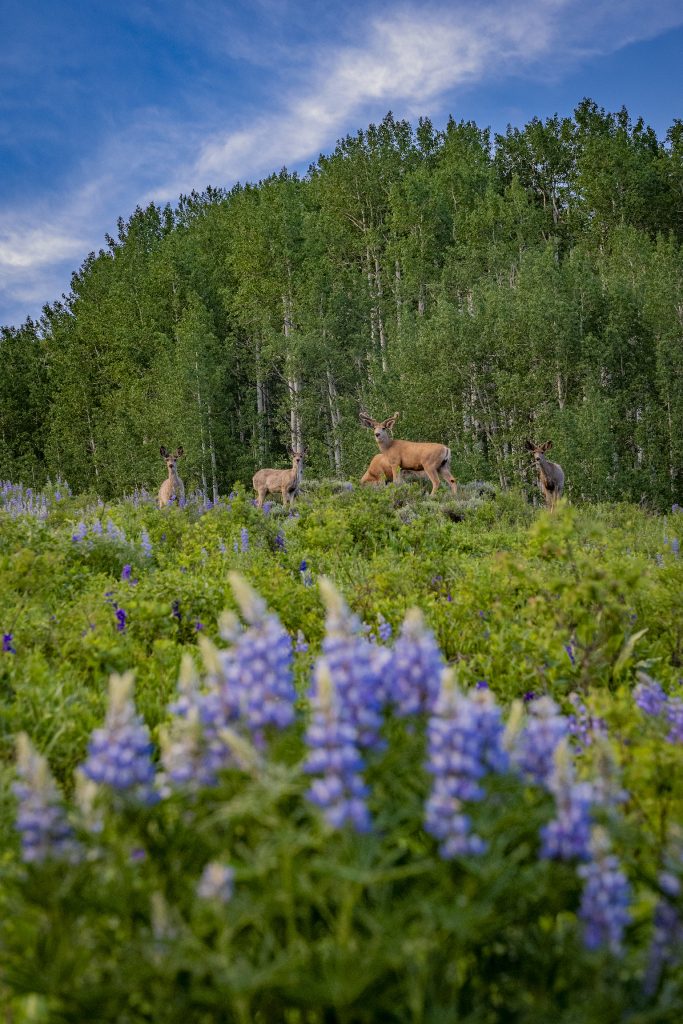
Over two million acres of the Gunnison Valley are protected, public land. Five different wilderness areas can be accessed in the valley. Public lands are protected from development and have rules on how the land can be used. Minimal traffic and protections allow wildlife to thrive and live.
Environments in the Gunnison Valley
A variety of environments make up the Gunnison Valley. Gunnison is a high desert with an elevation of 7,710’. Mule deer, bighorn sheep, chipmunks and red-tailed hawks are a few types of wildlife you might see in Gunnison.
Crested Butte sits at 8,885’. Its alpine and high alpine environment are home to marmots, elk and bears. Marshy areas such as Pitkin, Kebler Pass, Taylor Park and the Slate River Valley attract moose.
Wildlife in the Gunnison Valley
Common wildlife in the Gunnison Valley:
- Yellow-bellied marmots
- Mule deer
- Rocky Mountain elk
- Ringtails
- Red foxes
- Least chipmunks
- Bobcats
- Moose
- Black bears
- Mountain lions
- Rocky Mountain bighorn sheep

Common birds in the Gunnison Valley:
- Bald eagle
- Gunnison sage-grouse
- Red-tailed hawk
- American robin
- Mountain bluebird
- Broad-tailed hummingbird
- Rufous hummingbird
- Mountain chickadee
- Hairy woodpecker
- Cooper’s hawk
Wildlife hikes in the Gunnison Valley
Snodgrass Mountain Trail
Moderate, 5.8 miles out-and-back
Snodgrass Mountain Trail begins with an elevation of 9,612 feet and reaches 11,142 feet. Get to the trailhead by heading north on Gothic Road from Crested Butte. The trailhead is 4.3 miles up the road. Park on the left side of the road. This trail begins in an open meadow that is covered with wildflowers in the summer.
Stay left on the trail as you reach an undulating hillside with views of Crested Butte Mountain and Whetstone Mountain. The last half of the trail winds in and out of dense aspen groves.
Keep your eyes and ears open for marmots and pikas while hiking. Marmots are golden-brown rodents with fluffy tails. They can often be spotted sunning on rocks. Marmots make a whistling noise, giving them the nickname “whistle pig.” Pikas are small mammals in the rabbit family. They have round bodies and short limbs that enable them to dart across rocks and talus slopes.

Lupine, Gunsight Connection and Lower Loop Trail
Challenging, 12.8-mile loop
This loop is along the Slate River. Each of these trails can be hiked individually or connected to create the loop. Getting to the trailhead requires taking the paved recreation path from Crested Butte to Saddle Ridge Lane in Mt. Crested Butte. The trailhead is at the end of the cul-de-sac. Parking here is not allowed.
Lupine Trail winds through open fields with occasional tree cover. Cross Gunsight Bridge over the Slate River at Gunsight Connector. Gunsight Connected joins Lower Loop Trail. The trail follows the Slate River and provides beautiful views of Crested Butte Mountain.
Finish the hike in a mix of pine forests and grasslands. Moose are often sighted around the Slate River. They thrive in areas with access to water and subsist on aquatic plants. Scan the riverbanks to see if you can spot a moose. If you see one, admire it from afar and do not approach.
Neversink Trail
Easy, 1.3 miles out and back
Head west from Gunnison on Highway 50 for about 6 miles to get to Neversink. This short path runs parallel to the Gunnison River. It is one of the best places in Gunnison to see waterfowl. Depending on the season, you could spot mallards, Canada geese, American wigeon, cinnamon teal, northern pintail, green-winged teal and great blue heron.
Songbirds such as mountain bluebird, red-winged blackbird and yellow warbler are also common around the rivers. You might see beavers, muskrats and otters, too.

Summerville Trail
Hard, 19.9 miles out and back
This hike in the Fossil Ridge Wilderness begins just off the highway in Taylor Canyon. From Almont, travel northeast on CR 742 for 10 miles. Turn right on FSR #700 to the trailhead. Start hiking in upper Taylor Canyon through lodgepole forest. Two miles in, the trail starts to get steeper.
You’ll climb for eight miles to the timberline. Here you can connect with Fossil Ridge Trail or scramble up a summit along the Fossil Ridge.
This is a popular birding trail. Bring binoculars to spot raptors such as bald eagles and red-tailed hawks. Black bears are also sighted in this area. If you encounter a bear, maintain a safe distance and avoid making any sudden movements.
FAQs about wildlife spotting
Though there are lots of wildlife in the Gunnison Valley, there are no guarantees you’ll see them. The FAQ section below has tips and tricks for spotting wildlife.
How can I increase my chances of spotting wildlife on a hike?
Scan your surroundings and listen carefully. Look for movement and sounds like rustling leaves or animal calls. Time your hike after rain. Many animals are more active after a rainstorm.
Should I hike quietly?
Yes, but don’t be completely silent. You want to be quiet enough not to scare wildlife away, but noisy enough that animals are aware of your presence to avoid startling encounters.
Is it better to hike alone or in a group?
Hiking in small groups can increase your odds of spotting wildlife while still staying safe.
Can I bring my dog?
It’s best to leave your dog at home. Pets can scare off wildlife or provoke dangerous animals.
Can I feed wildlife if they approach me?
Never feed wildlife. It’s harmful to animals and can create dangerous situations for humans.
How close can I get to animals?
Always maintain a safe distance. Use binoculars or a zoom lens for a closer look rather than approaching animals. Colorado Parks and Wildlife (CPW) recommends staying at least 75 feet (23 meters) from most wildlife. You should stay at least 100 feet (91 meters) away from large wildlife such as bears, moose, wolves and mountain lions. If you can extend your arm and cover the animal with your thumb, you’re likely far enough away.
How can I avoid wildlife attacks?
Hiking in groups and making noise is the best way to prevent wildlife attacks. Making noise alerts wildlife to your presence. It can also help them not be startled, which could trigger a chase or attack response.
Carry bear spray in bear territory. If you encounter a bear, make yourself look large and be loud. Do not play dead with black bears, but fight back if necessary.
If you encounter a moose, stay calm. Make your presence known by speaking calmly and clearly. Slowly back away while keeping eyes on the moose. If it charges, find cover behind a solid object. If knocked, curl into a ball to protect your head and neck.
If you encounter a mountain lion, make yourself appear large and threatening. Do not run or make sudden movements, but slowly back away while making noise. Fight back if necessary. The same rules apply to wolf encounters.
What if I’m hiking in bear country?
Carry bear spray and know how to use it. Make noise periodically to avoid surprising bears. CPW recommends using bear spray if a bear gets within 40 feet of you. If camping, store food in a bear bag or bear canister. Leave No Trace offers a handy guide for hanging bear bags and camping in bear territory.
Be extra mindful of bears in the fall. Bears consume large amounts of food in the fall, known as fall hyperphagia, to bulk up before winter. Be bear aware and take precautions during this time when bears are more active.
What is the best season to spot wildlife?
Spring, fall and summer are the best seasons to see wildlife. Many animals hibernate or migrate in the winter. Elk, moose and deer move to lower elevations in the fall as temperatures grow colder. The rut also happens in the fall, making it a particularly good time to see elk.
When is the best time of day to see wildlife?
Wildlife is most active early in the morning and at dusk. Planning hikes at these times of day can help increase your chances of seeing wildlife.

Guided hiking
Consider a guided hike if you want to see wildlife. Guides know when and where to go to see wildlife. They know what signs to look for, such as tracks, scat, sounds and movement. A guide could help you spot something you might otherwise miss. They also have a lot of knowledge about the environment and wildlife.
Wildlife at Black Canyon of the Gunnison National Park
Much of the same wildlife present in the Gunnison Valley also lives in the Black Canyon. Non-venomous snakes such as smooth green, great basin gopher, garter and striped whipsnakes live in the Black Canyon. Peregrine falcon, blue grouse, cooper’s hawk, canyon wren and golden eagles can be spotted flying through the canyon. Check out this article about Seven Ways to Safely Watch Wildlife for more tips.
Do you have to go on a hike to see wildlife?
While you’re more likely to spot wildlife in more secluded places you have to hike to, that’s not the only way to see animals and birds.
- The Almont Triangle
This area is open BLM land between Gunnison and Almont. Elk, bighorn sheep and deer are often visible from Highway 135. - Gunnison River and Tomichi Creek Wetlands
Walk along the Gunnison River to spot waterfowl, herons and otters. - Blue Mesa Reservoir
Bighorn sheep love playing on the cliffs around Blue Mesa. - Taylor Park
Moose can be spotted in the marshy meadows and forests of Taylor Park. - Crested Butte Land Trust wetlands
Wetlands edge the town of Crested Butte behind the Gas Café and along Lower Loop. Birds such as sandhill cranes and ducks are often visible. Keep an eye out for foxes and deer, too. - Roaring Judy Fish Hatchery
Walk the hatchery to see trout and kokanee salmon swimming. In the fall, watch the kokanee run up the East River. - Ohio Creek Road
This scenic road cuts through ranches and provides beautiful views of the Carbon Peak, the Castles and the Anthracite Range. A large herd of elk often hang out in the pastures and meadows visible from the road. Foxes and coyotes also live in the area.
Seasonal wildlife closures in the Gunnison Valley
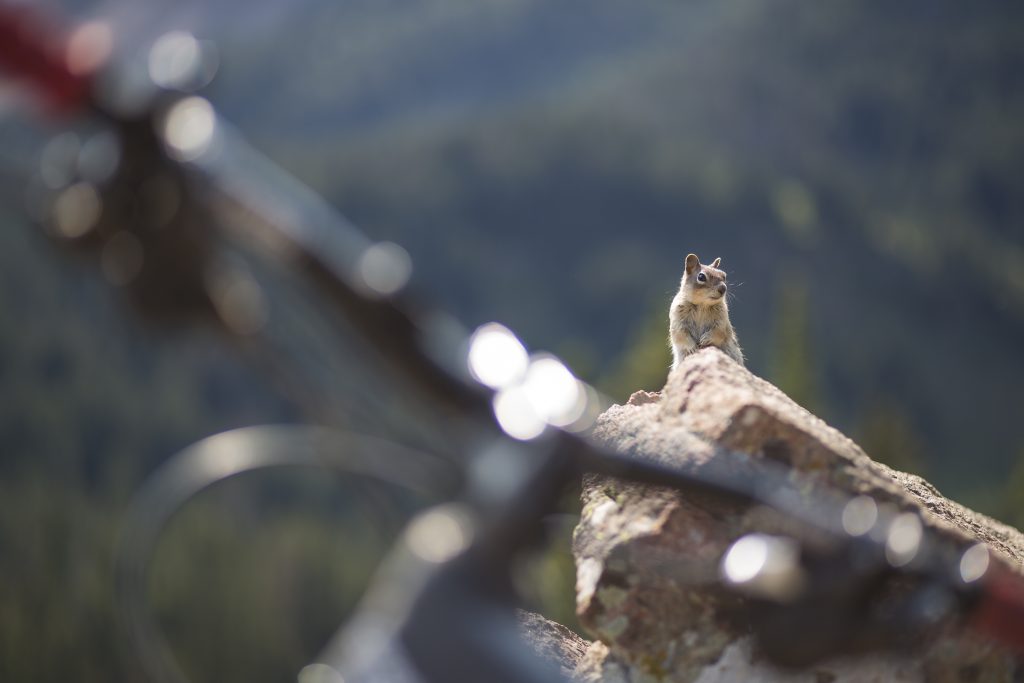
Wildlife closures help protect wildlife and prevent trail damage. Signal Peak closes from January 1-April 30 to protect elk and mule deer. Signal Peak and Hartman Rocks have closures from March 15-May 15 for Gunnison sage grouse protection. These closures also help prevent road damage during mud season. Learn more about spring trail restrictions.
Shed antler collection is prohibited in this same timeframe. The Slate River enters a voluntary closure from March 15 to June 21 between Gunsight Bridge and Crested Butte to protect a heron rookery.
Gunnison sage grouse
Gunnison sage grouse are a unique species of sage grouse that was classified in 2000. Most of their population is in southeastern Utah and southwestern Colorado, including some areas surrounding Gunnison. The species has declined in population due to habitat loss and was added to the threatened species list in 2014. Certain trails are closed in spring for the Gunnison sage grouse mating season. See pictures and learn more about the bird on All About Birds.
Plan a trip
Use our trip planning guide to book flights, reserve lodging and discover other things to do in Gunnison and Crested Butte.
Learn more about wildlife in the Gunnison Valley
Check out these guides to learn more about the flora and fauna in the Gunnison Valley:
